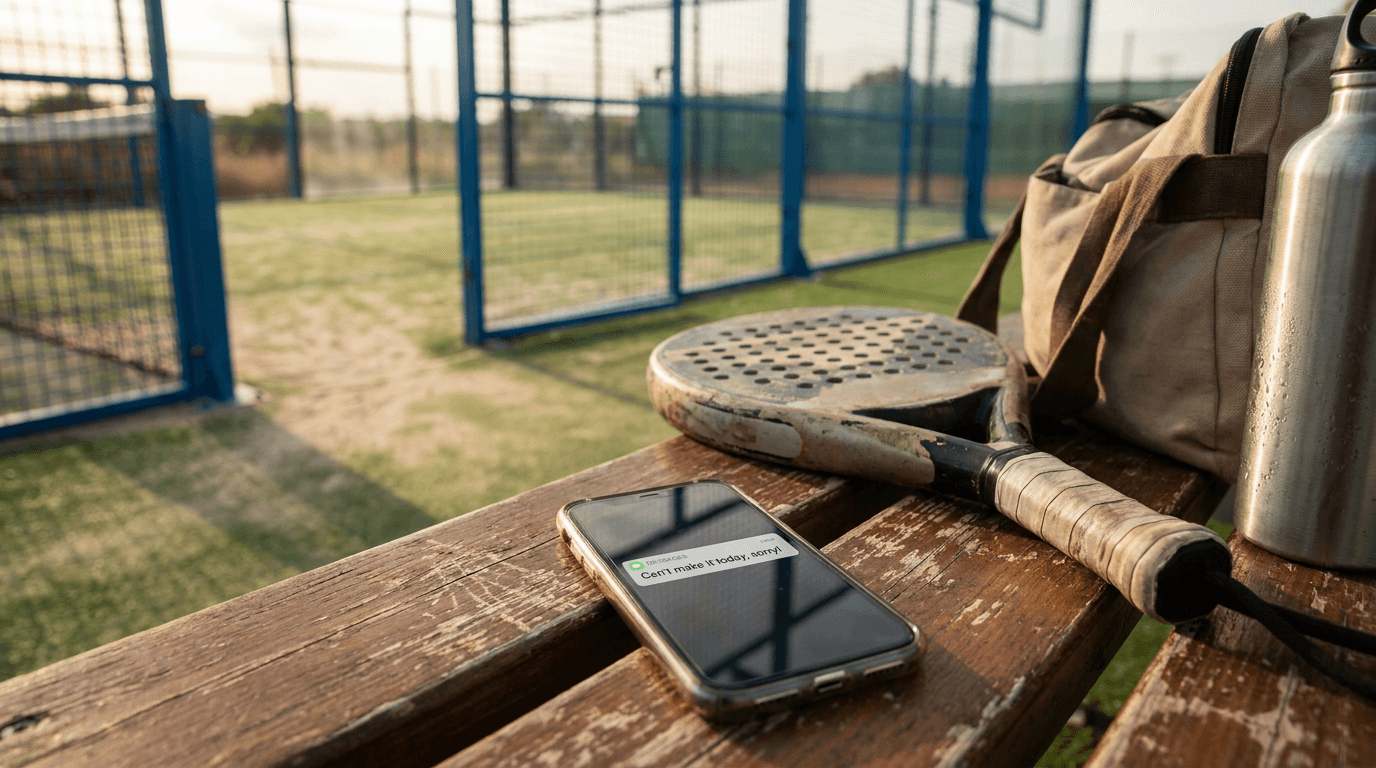
You text a group chat, someone confirms, you block off your evening, and two hours before the game a message shows up: "so sorry, something came up." Maybe it's real. Maybe it's the third time this month. Either way, you're standing on an empty court, or scrambling to find a replacement, again.
If this sounds familiar, you're not imagining a pattern. Casual pickup games, arranged informally through friends, group chats, or club noticeboards, have close to zero cost for cancelling. There's no fee, no record, and usually no consequence beyond a slightly awkward apology text.
Compare that to a paid class, a court booking with a deposit, or a league match with standings on the line. All of those have some kind of cost attached to bailing, whether it's money, reputation, or a spot in a table that everyone can see. Casual games have none of that. Flaking on a friend costs almost nothing in the moment, even if it's mildly annoying later, so it keeps happening even among people who genuinely like playing with you.
It's tempting to take it personally, but most flaking isn't really about the person who got cancelled on. It's about priorities shifting under zero accountability. Work runs long, plans with someone else come up, or the person just doesn't feel like it that day, and there's nothing structurally stopping them from bailing since nobody else is depending on a system to notice.
This is exactly the kind of thing that's near-universal enough to explain why almost every padel club has a strict no-show fee policy. Venues learned this lesson with money on the line. Casual players are still learning it the hard way, one cancelled evening at a time.
The fix isn't nagging people to be more reliable. It's building in a small amount of accountability, the same way clubs did with no-show fees, but for informal games. That can be as simple as playing with a smaller, more committed group instead of a big loose chat, confirming closer to game time instead of days in advance, or using a platform where showing up, or not, is visible and tracked instead of invisible.
That last part is exactly what Rally is built around: matches you actually show up for build your reputation and your rating, so flaking has a real cost again, and reliable players get matched with other reliable players.
If you want the data-backed case for why this isn't just you, see our piece on the real cost of no-shows. For the specific version where someone doesn't show up at all, see what happens when you get stood up. And if unreliable partners have you rethinking the whole approach, here's how Rally calculates your level instead.
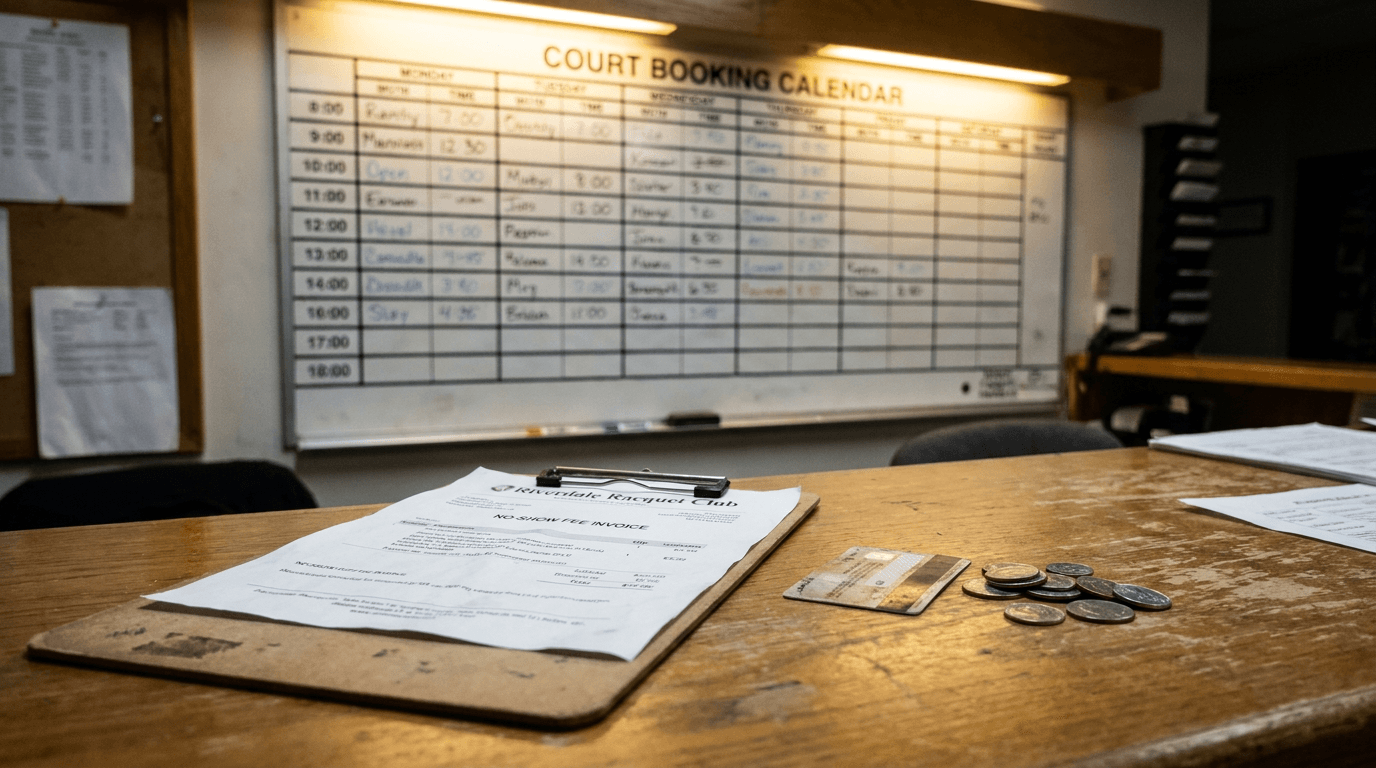
The Real Cost of No-Shows in Racket Sports (And Why Every Club Charges You For Them)
Padel, tennis, and squash venues almost universally charge no-show fees. Here's what that tells you about how much flaking really costs, and who pays.
Read
Peer-Rated vs. Self-Reported: How Rally Calculates Your Level
Rally doesn't ask you to guess your own number. Here's how peer-based rating actually works, across squash, padel, and tennis.
Read
Why Self-Rated Skill Levels Don't Work (And What Sandbagging Costs Everyone)
Self-reported ratings drift for reasons that have nothing to do with skill. Here's why sandbagging happens and what a fairer system looks like.
Read